Rewire Your Brain: Discover the Powerful Potential of Neurofeedback
A Mother’s Call for Veterans and Families, a Smarter Approach to Mental Health
Mental health conversations are finally opening up—and not a moment too soon. For too long, too many have suffered in silence. Several years ago I was diagnosed with severe PTSD, ADHD, and generalized anxiety disorder. The labels brought a strange mix of relief and fear: relief at finally having answers, fear at how I would actually heal without becoming dependent on medications for the rest of my life
I was fortunate to find traditional neurofeedback through an experienced team at Sandstone Neurofeedback in The Woodlands, Texas (sandstoneneurofeedback.com). What I discovered was not another temporary fix, but a drug-free way to retrain the brain itself—something that holds profound promise for the people our country too often leaves behind: military veterans at high risk of suicide, children and adults on the autism spectrum, and anyone living with the daily chaos of ADHD or trauma.
What exactly is traditional neurofeedback?
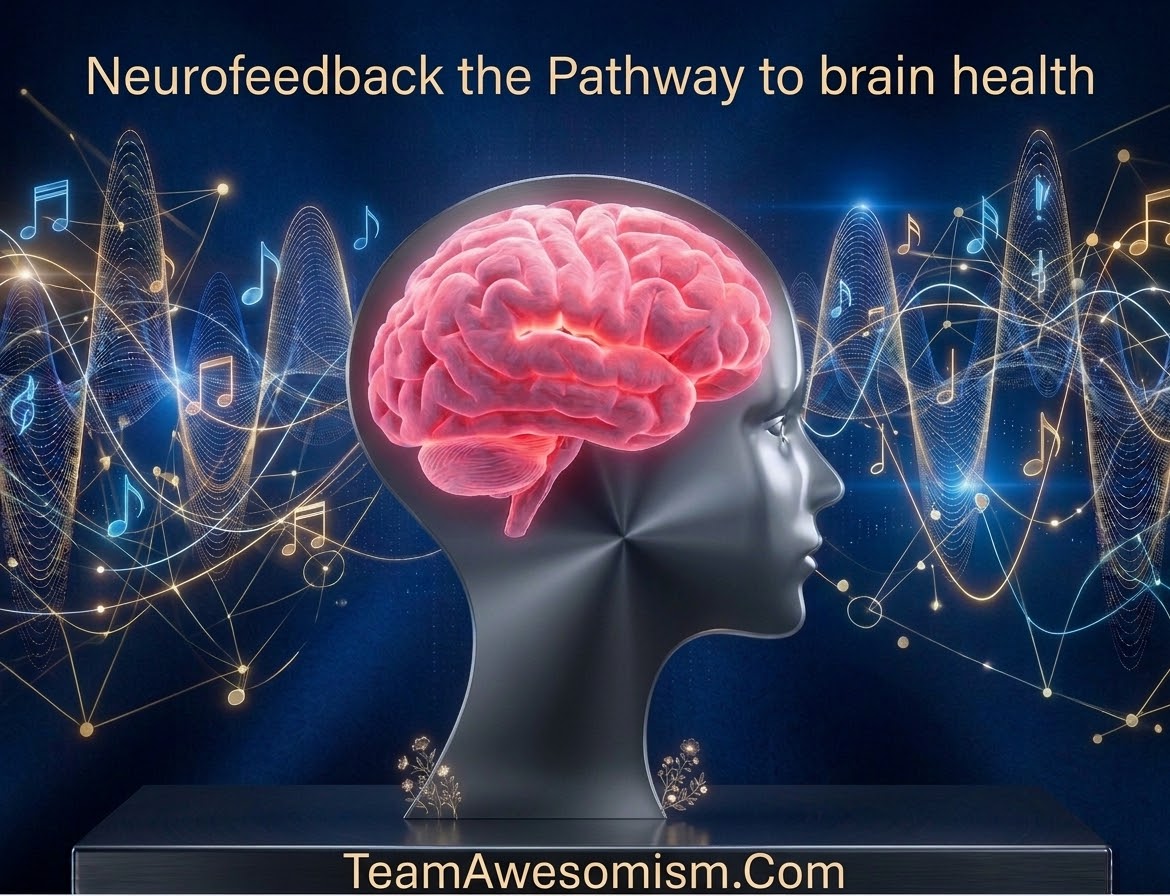
Neurofeedback (also called EEG biofeedback) is a form of operant conditioning for the brain. Sensors placed on the scalp measure real-time electrical activity—brainwaves such as delta, theta, alpha, beta, and sensorimotor rhythm (SMR). Software analyzes that activity and delivers immediate feedback, usually through a video, animation, or audio tones that only “reward” the brain when it produces healthier patterns. Over repeated sessions the brain learns to self-regulate. A quantitative EEG (qEEG) brain map first identifies which areas are dysregulated (for example, excess theta relative to beta in ADHD, or disrupted alpha-theta ratios in PTSD).
Protocols are then customized. Sessions typically last 30–45 minutes; many people complete 20–40 sessions. Importantly, traditional neurofeedback does not send electricity into the brain—it simply shows the brain its own activity so it can learn. This distinguishes it from other commercial approaches such as IASIS. Traditional methods rest on more than 65 years of university-based research and allow measurable before-and-after tracking tied to specific goals. chadd.org
I entered treatment skeptical. How could watching a screen while electrodes monitored my brain help depression, anxiety, and trauma when the standard answers were talk therapy or pills? After assessment by Dr. Agnes, brain mapping in a quiet room (eyes open and closed), and a clear review of the results, I began sessions. They were calm: light exercise or oxygen to increase blood flow, then electrodes, a comfortable chair, and feedback that responded to my brain activity. Progress was measurable. For me—and for many others—the changes stuck.
The evidence and real-world impact
A landmark 2009 meta-analysis by Arns and colleagues examined neurofeedback for ADHD and found large effect sizes for inattention (0.81) and moderate effects for impulsivity (0.69) and hyperactivity (0.46)—results that held up in longer-term follow-ups. pubmed.ncbi.nlm.
For PTSD, a 2024 systematic review and meta-analysis of 17 studies (628 patients) concluded that neurofeedback produces clinically meaningful reductions in symptoms, with effect sizes that often increase at follow-up. The authors noted moderate-to-high quality evidence of positive clinical effects. frontiersin.org. Trauma expert Dr. Bessel van der Kolk has described neurofeedback as one of the most promising developments in trauma treatment because it directly addresses dysregulated brain activity without requiring patients to relive every detail of their trauma. psychotherapy.net
For autism, studies and case series (including work by cobber & Padolsky and others) have reported improvements in attention, social interaction, behavior, and cognitive flexibility in a substantial majority of participants—sometimes cited around 89% showing meaningful gains. carltonneurofeedbackcen
Promise for suicide prevention
Veterans and autistics die by suicide at rates far higher than the general population. PTSD, depression, anxiety, insomnia, and impaired self-regulation are major drivers. By training the brain toward calmer, more flexible patterns, neurofeedback attacks those root factors.
Ongoing VA-supported research is even testing real-time fMRI neurofeedback specifically to reduce suicide-specific rumination in veterans. research.va.gov This is not a cure-all, but it is a non-drug tool that can reduce the very symptoms that push people toward crisis.
Why the Trump administration should think outside the box
We have a mental-health crisis. Suicide rates remain too high. The administration has already signaled willingness to challenge conventional healthcare approaches.
Expanding research funding, directing the VA to evaluate and, where appropriate, cover traditional neurofeedback more broadly, and encouraging insurance pathways would put a proven, long-term, drug-free option within reach of those who need it most—veterans, first responders, and families raising children with autism or ADHD.
Cost is currently a barrier; many insurers still do not cover it. That can change with leadership that prioritizes results over outdated habits.
I know what neurofeedback did for me and for others I have seen it firsthand. It needs trained professionals, proper assessment, and realistic expectations. But it also needs to be part of the national conversation, before we lose more to suicide.
Thanks so much for reading this! Also, check out this previous blog we put out a month ago!